
Founder Growth
Solo Founder Funding: Why 83% of Solo Founders Fail to Raise VC and How to Beat the Odds
Only 17% of solo-founded startups closed a VC round in 2024. Here is the signaling playbook that closes the 61-point funding gap.

Founder Pipeline
Scaling Founder-Led Growth: How to Turn Founder Intuition Into a Revenue System
Founder-led growth breaks at scale when your best sales context lives only in your head. Here is how to turn founder intuition into a system that sells without you.

VCO Tactics
Founder Engagement on LinkedIn: The 15-Minute Daily Flywheel That Builds Pipeline
Founder engagement on LinkedIn is where pipeline actually starts. Here is the 15-minute daily flywheel, the 5-3-2 comment rule, and the 90-day math behind it.
VCO Tactics
The Founder LinkedIn Profile That Converts: 7 Elements That Turn Visitors Into Pipeline
A founder LinkedIn profile is where visibility converts or leaks. Here are the 7 elements that turn a profile visitor into pipeline, plus a 30-minute audit.

VCO Tactics
Platform Selection for Founders: Where B2B Pipeline Actually Comes From
Most founders spread thin across five platforms. Here is the three-test framework that shows why B2B pipeline concentrates on one channel instead of five.

VCO Philosophy
Founder Personal Brand on LinkedIn: Why Your Real Voice Beats Corporate Content
Your founder personal brand on LinkedIn lives or dies on one thing: your real voice. Here is why unpolished conviction beats corporate content, and how to activate it in 30 days.

VCO Tactics
Founder Bottleneck: How Centralized Decisions Cost You 20-30% of Revenue
The founder bottleneck tax quietly costs most companies 20 to 30 percent of revenue. Here is how to measure it and fix it.

Visibility
Founder Visibility: The 5-Hour Workweek System That Generates Pipeline
Founder visibility does not need hours a day. Here is the exact 5-hour weekly system that turns a LinkedIn presence into inbound pipeline.

Founder-Led Sales
Founder-Led Sales: Why the Founder Still Beats AI Outreach
AI made outreach cheap and identical. Founder-led sales still wins because trust is the one input no tool can copy.

Signal Intelligence
The Compound Signal Score: How to Score LinkedIn Signals Before You Send a DM
Score the relationship before you send the DM. Here is the compound signal score that ranks LinkedIn connections so you message only when the signal is warm.

VCO Philosophy
The Cost of Founder Invisibility: What Every Silent Month Actually Costs You
Invisibility is a silent tax on deals, talent, and funding. Here is the math, the five leak points, and how to stop paying it.

VCO Tactics
The Competitor Audience: How Founders Build Pipeline in the Comment Sections Their Buyers Already Read
Your buyers already gather in your competitors' comment sections. Here is the play that turns careful engagement into warm pipeline without pitching.

Founder-Led Growth
Founder-Led Growth: Why Your Personal Brand Is Your Company's Most Underleveraged Asset
Founder-led growth turns the founder's personal brand into the company's best distribution channel. Here is the LinkedIn playbook, the signals, and the loop.

Content Strategy
Compounding Content: The Framework That Turns LinkedIn Posts Into a Pipeline Asset
Compounding content keeps generating pipeline months after you publish. The framework, the three post types, and the ratio that builds a lasting asset.

VCO Philosophy
Counter-Positioning: The LinkedIn Strategy That Makes Your Competitors Irrelevant
Counter-positioning is how founders win attention with a point of view competitors cannot copy. Here is the 3-move framework that turns it into pipeline.

VCO Philosophy
Why Visibility Compounds: The Multiplier That Turns Founder Skill Into Pipeline
Visibility is not a channel, it is a multiplier. Here is why visibility compounds every founder skill into pipeline, plus the 90-day math behind it.

CEO
The CEO Time Trap: How to Stop Firefighting and Reclaim Your Week for Strategy
CEOs spend 62% of the week firefighting while strategy gets the leftovers. Here is the framework to reclaim strategic time and stop being the bottleneck.

LinkedIn Strategy
How the LinkedIn Algorithm Works: What Actually Drives Reach
The ranking signals that decide LinkedIn reach: dwell time, comment depth, content formats, cadence, and the first 90 minutes.

VCO Philosophy
Relevance Is the Missing Variable: Why Founders Post Consistently and Still See No Opportunity
Consistency is not enough. Founders who post daily and still see no pipeline are missing the relevance variable in the VCO equation. Here is how to fix it.

Signal Intelligence
The Trigger Event Map: How Job Changes and Funding Rounds Reveal Buying Intent Before the Ask
Job changes, funding rounds, and hiring posts are buying signals most founders scroll past. Here is the trigger event map that reads them into pipeline.

Signal Operations
The Founder's Signal Log: A 5-Column System That Turns a Week of LinkedIn Activity Into Ranked Pipeline
Your feed is full of buying signals that never make it past the notifications tab. Here is the five-column signal log that turns a week of activity into a ranked pipeline in fifteen minutes a day.

VCO Tactics
The Founder's Batch Day: How to Write a Month of LinkedIn Content in One Sitting
Daily writing burns founder hours. Here is the batch day system that produces a month of LinkedIn content in one sitting, cuts context-switch cost, and keeps your voice intact.

Founder Pipeline
The Founder Pipeline Audit: 5 Leaks That Kill LinkedIn-Sourced Revenue
Most founder-sourced pipeline dies between the comment and the close. Here are the five leaks that kill LinkedIn-sourced revenue and the audit that plugs them.

Case Studies & Proof
The Proof Engine: How Founder Wins Become Your Highest-Converting Content
Proof beats opinion. Here is the four-part proof engine that turns closed deals, partnerships, and hires into your highest-converting content.

VCO Philosophy
Opportunity Density: The One Number That Tells Founders If Their Visibility Is Working
Most founders measure the wrong number. Here is opportunity density, the output of the VCO equation, and how to move it.

Signal Operations
The Signal Ownership Matrix: Handle, Delegate, or Delete Every LinkedIn Signal
Most founders chase every LinkedIn signal and burn out. Here is the ownership matrix that decides what you handle, delegate, or delete.

Signal Intelligence
The Signal Decay Curve: Why Every LinkedIn Buying Signal Has a Half-Life
LinkedIn buying signals decay fast. Here is the half-life framework that tells founders exactly when to act before buyer intent goes cold.

VCO Tactics
The Founder's First 30 Days: A Week-by-Week LinkedIn Launch System
Most founders burn out by week three because they launch backwards. Here is the week-by-week launch system that fixes the sequence.

Signal Intelligence
The Signal Handoff: How to Route LinkedIn Buying Intent to Sales Without Dropping Context
Founder signals die in handoffs with no context. Here is the routing system that passes LinkedIn buying intent to sales without losing momentum.

Founder-Led Growth
The Founder Pipeline Scoreboard: 6 Metrics That Turn LinkedIn Activity Into Tracked Revenue
Most founders track content but not revenue. Here is the 6-metric scoreboard that turns LinkedIn activity into tracked, founder-sourced pipeline.

Engagement
The Comment-Only Pipeline: How a Pre-Seed Founder Generated $850K Without a Single Post
A pre-seed founder built an $850K pipeline purely through comments. Here is the comment-only system that turns engagement into revenue.

Signal Intelligence
The Signal Intent Hierarchy: How to Rank LinkedIn Interactions by Purchase Probability
Not all LinkedIn interactions are equal. Here is the intent hierarchy that ranks reactions, comments, and DMs by purchase probability.
Signal Intelligence
The 30-Minute Signal Window: How Founders Capture Buying Intent Before LinkedIn Interest Goes Cold
LinkedIn buying intent has a 30-minute window. Here is the capture system that turns a warm moment into a booked meeting.
Pipeline
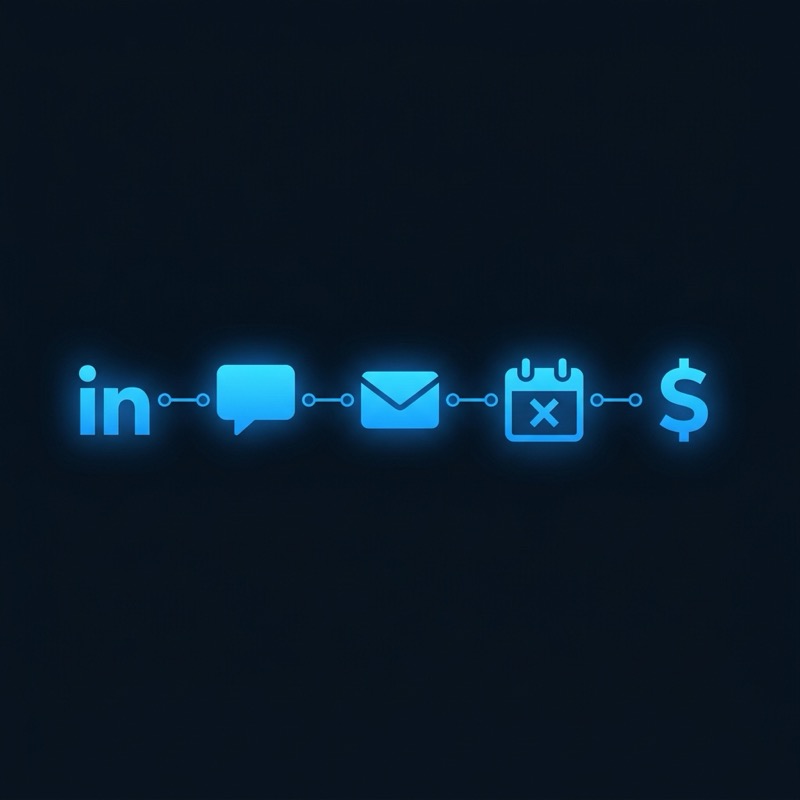
The Content-to-Revenue Chain: Mapping Every Stage from LinkedIn Post to Closed Revenue
Content without a revenue chain is just content. Here is the full chain that maps every stage from LinkedIn post to closed revenue.

Visibility
The 180-Day Visibility Compound: How Consistent LinkedIn Presence Generated $1.2M in Inbound Pipeline Without a Single Cold DM
Consistency compounds. Here is the 180-day visibility framework that generated $1.2M in inbound pipeline with zero cold DMs.

Engagement
The Comment-to-Calendar System: How Founders Convert LinkedIn Comment Threads Into Qualified Intro Calls
Comments are the new cold call. Here is the comment-to-calendar system that converts LinkedIn threads into qualified intro calls.

Signal Intelligence
The Executive Response Window: How to Route High-Intent LinkedIn Signals to Sales in Under 15 Minutes
Speed is a revenue function. Here is the executive response window that routes high-intent LinkedIn signals to sales in under 15 minutes.

Visibility
The Executive Visibility SLA: A Weekly Cadence That Keeps Founders Relevant Without Becoming Full-Time Creators
Visibility without a SLA is a hobby. Here is the weekly cadence that keeps founders relevant without turning them into full-time creators.

Founder-Led Sales
The First-Meeting Playbook: How to Structure a Founder-Led Sales Conversation That Started as a LinkedIn Comment
The first meeting decides everything. Here is the founder-led sales playbook for conversations that started as LinkedIn comments.

Automation
The Founder's Signal Playbook: 5 Automated Triggers That Convert LinkedIn Activity Into CRM Pipeline
Your CRM should be fed by signals, not manual entry. Here are the 5 automated triggers that convert LinkedIn activity into CRM pipeline.

Pipeline
The Content-to-Close Pipeline: Measuring the Full Revenue Journey of a LinkedIn Post
A LinkedIn post is not a metric. It is the start of a revenue journey. Here is the content-to-close pipeline that measures the full journey.

Engagement
The Founder's Engagement Playbook: How to Turn Daily LinkedIn Comments Into 10 Pipeline Conversations Per Week
Daily comments are the engine. Here is the engagement playbook that turns them into 10 pipeline conversations per week.

Visibility
The Cost of Invisible Expertise: What Founders Lose When They Stay Silent on LinkedIn
Silence is expensive. Here is the math on what founders lose when they stay invisible on LinkedIn and why it compounds.

Pipeline
LinkedIn as Pipeline Infrastructure: A Technical Architecture for Founder-Sourced Revenue
LinkedIn is not a channel. It is infrastructure. Here is the technical architecture that turns founder visibility into pipeline.

Engagement
The Referral Machine You Already Own: How Strategic Engagement Compounds Into Warm Pipeline
You already own a referral machine. Here is how strategic engagement turns your network into a compounding source of warm pipeline.

Content
The 20-Minute Founder Post: A Pre-Built Framework for LinkedIn Content That Generates Pipeline
You don't need more time. You need a framework. Here is the 20-minute founder post that generates pipeline without burning your week.

Signal Intelligence
Beyond Profile Views: The Hidden LinkedIn Signals That Predict Purchase Intent
Profile views are the tip of the iceberg. Here are the hidden LinkedIn signals that predict purchase intent before the DM.

Visibility
The ROI of Founder Visibility: How 6 Months of LinkedIn Replaced a $120K Outbound Machine
Six months of LinkedIn replaced a $120K outbound machine. Here is the ROI breakdown that proves founder visibility pays for itself.

Content
The 90-Day Content Capture System: How Founders Turn Conversations Into LinkedIn Assets
You already have the content. You just don't capture it. Here is the 90-day capture system that turns conversations into LinkedIn assets.

Signal Intelligence
The Signal Dashboard: How to Build a LinkedIn Intelligence System That Routes Buying Intent to Sales
Signal without a dashboard is noise. Here is the LinkedIn intelligence system that routes buying intent to sales automatically.

Visibility
From Zero Posts to $340K Pipeline: A 90-Day Executive Visibility Transformation
Zero posts to $340K pipeline in 90 days. Here is the executive visibility transformation that proves the system works.

Automation
3 AI Agents I Deployed to Turn Signal Noise Into Pipeline Revenue — Koka Sexton
Three AI agents turned signal noise into pipeline revenue. Here is the deployment playbook for AI agents that actually produce pipeline.

Pipeline
The Pipeline Attribution Gap: How to Prove Your LinkedIn Activity Generates Revenue
You can't manage what you can't attribute. Here is the attribution framework that proves LinkedIn activity generates revenue.

Signal Intelligence
Signal Triage: How to Prioritize 100 LinkedIn Notifications Into 5 Revenue Conversations
One hundred notifications, five revenue conversations. Here is the signal triage system that separates noise from intent.

Visibility
The Visibility Flywheel: Why 30 Minutes a Day Compounds Into an Unbeatable Moat
Thirty minutes a day compounds into an unbeatable moat. Here is the visibility flywheel that makes consistency automatic.

Engagement
The Comment Pipeline: How 15 Minutes a Day on LinkedIn Generated $340K in Pipeline
Fifteen minutes a day, $340K in pipeline. Here is the comment pipeline system that turned daily engagement into revenue.

Signal Intelligence
Compound Signal Scoring: Why One Reaction Is Noise But Five Is Pipeline
One reaction is noise. Five is pipeline. Here is the compound signal scoring system that turns engagement patterns into revenue.

Pipeline
Measuring What Matters: A Dashboard for Founder-Sourced Revenue
If you don't measure founder-sourced revenue, it doesn't exist. Here is the dashboard that makes it visible and repeatable.

Signal Intelligence
The Koka Signal Model — Visual Framework — Koka Sexton
The Koka Signal Model visual framework. See how every LinkedIn interaction maps to the signal-to-revenue model.

Visibility
The 90-Day Executive Visibility Flywheel: A Step-by-Step System for Founders — Koka Sexton
Ninety days to a visibility flywheel. Here is the step-by-step system for founders who want LinkedIn to produce pipeline on autopilot.

Pipeline
Your Content Is Your Pipeline: How Founder-Sourced Revenue Changes the Game — Koka Sexton
Your content is your pipeline. Here is how founder-sourced revenue changes the game for companies that embrace it.

Pipeline
Your LinkedIn Feed IS Your Funnel: The Founder Pipeline Architecture — Koka Sexton
Your feed is your funnel. Here is the founder pipeline architecture that turns LinkedIn activity into a revenue system.

Visibility
The Invisible Founder Tax: What You Lose Every Month You Don't Show Up — Koka Sexton
Every month you don't show up, you pay the invisible founder tax. Here is what it costs and how to stop paying it.

Signal Intelligence
Every Reaction Tells a Story: The Koka Signal Model for Reading Buyer Intent — Koka Sexton
Every reaction tells a story. Here is the Koka Signal Model for reading buyer intent before the first conversation.

Signal Intelligence
From Like to Signed: Real Signal-to-Revenue Stories — Koka Sexton
From like to signed. Here are real signal-to-revenue stories that show how LinkedIn engagement becomes closed business.

Pipeline
From Signal to Sales Call: The Speed-to-Lead Playbook for Executives — Koka Sexton
Speed to lead decides who wins. Here is the playbook that moves executives from signal to sales call before the window closes.

Founder-Led Sales
From Selling to Helping: The Mindset Shift That Multiplies Revenue — Koka Sexton
Selling repels. Helping attracts. Here is the mindset shift that multiplies revenue by putting the buyer first.

Founder-Led Sales
The DM That Actually Gets a Reply: A Framework for LinkedIn Outreach That Converts — Koka Sexton
Most DMs get ignored. Here is the DM framework that actually gets replies and converts outreach into conversations.

Visibility
The Personal Brand Audit: How to Know If Your LinkedIn Presence Is Actually Working — Koka Sexton
You can't improve what you don't audit. Here is the personal brand audit that tells you if LinkedIn is actually working.

Engagement
The LinkedIn Comment Strategy That Builds Pipeline — Koka Sexton
Comments build pipeline. Here is the LinkedIn comment strategy that turns daily engagement into a revenue source.

Visibility
Why Your Company's Best LinkedIn Asset Isn't Its Company Page — Koka Sexton
Your company page isn't your best asset. Here is why employee voices outperform brand pages on LinkedIn.

Automation
LinkedIn Lead Generation Systems: When to Automate and When to Personalize — Koka Sexton
Automation scales, personalization converts. Here is the lead generation system that knows when to use each.

Content
How to Develop a Point of View Worth Following — Koka Sexton
A point of view is the difference between noise and authority. Here is how to develop a POV worth following.

Founder-Led Sales
Getting Executive Buy-In for Social Selling (When You're Not the CEO) — Koka Sexton
You don't need to be the CEO to drive social selling. Here is how to get executive buy-in from the middle of the org.

Content
The 2-Hour/Month Executive Content System — Koka Sexton
Two hours a month is enough for executive content. Here is the system that keeps leaders visible without burning their calendar.

Visibility
The Executive LinkedIn Profile: From Invisible to Unignorable in 60 Minutes — Koka Sexton
Your profile is your storefront. Here is the 60-minute executive profile upgrade that makes you unignorable.

Positioning
Find Your Niche: How to Pick a Positioning Statement That Actually Differentiates You — Koka Sexton
A niche is not a limitation. It is a filter. Here is how to pick a positioning statement that actually differentiates you.

Pipeline
How to Measure Social Selling ROI (and Prove It to Your Board) — Koka Sexton
If you can't measure social selling ROI, the board won't fund it. Here is the measurement framework that proves the return.

Founder-Led Sales
The Nurture Protocol: Staying Top-of-Mind Without Being Annoying — Koka Sexton
Nurture without a protocol is spam. Here is the nurture protocol that keeps you top-of-mind without being annoying.

Founder-Led Sales
The Warm Outreach Playbook: Turning Profile Views Into Conversations — Koka Sexton
Profile views are warm leads. Here is the warm outreach playbook that turns them into conversations.

Founder-Led Sales
The Welcome System: What Happens After Someone Connects With You — Koka Sexton
A connection is not a lead. Here is the welcome system that turns new connections into conversations and pipeline.

CEO
Burnout-Proofing Your Leadership: Addressing the 72% CEO Burnout Epidemic in Startups
Seventy-two percent of CEOs report burnout. Here is how to burnout-proof your leadership before it costs you the company.

CEO
The Delegation Dilemma: Why Letting Go is the Hardest Leadership Test and How to Pass It
Delegation is the hardest leadership test. Here is how to pass it and scale beyond what you can do alone.

Founder-Led Sales
From Founder-Led Sales to Scalable Process: Documenting the 60-70% Time Sink
Founder-led sales is the best sales motion until it isn't. Here is how to scale it into a documented process.

CEO
The Operational Efficiency Playbook: Turning 20-30% Revenue Loss into Growth Fuel
Operational inefficiencies cost 20-30% of revenue. Here is the playbook that turns that loss into growth fuel.

Strategy
Avoiding the Product-Market Fit Mirage: Why Early Customers Lie
Early customers lie. Here is how to avoid the product-market fit mirage and build on honest signal.

Strategy
From Solo Founder to Fundable Team: Data-Backed Strategies for Attracting Investor Confidence
Investors fund teams, not solo founders. Here is how to build the fundable team that unlocks capital.

Founder-Led Sales
Cold Calling Is Dead. Warm Calling Is Not.
Cold calling is dead. Warm calling is not. Here is why warm outreach beats cold outreach in the AI era.

Visibility
The 5 LinkedIn Profile Sections Executives Always Get Wrong
Five profile sections cost executives credibility every day. Here is how to fix them in an afternoon.

Content
The 80/20 Rule for Executive LinkedIn Content
Eighty percent of results come from twenty percent of content. Here is how to apply the 80/20 rule to LinkedIn.

Pipeline
How We Attributed $340K in Pipeline to a Single LinkedIn Post
One post, $340K in pipeline. Here is how we attributed a single LinkedIn post to real revenue.

Founder-Led Sales
The 3-Touchpoint Rule: Earn the Ask Before You Make It
You haven't earned the ask until you've added value three times. Here is the 3-touchpoint rule that makes outreach work.

Content
The Four Content Pillars Every Executive Needs on LinkedIn
Four content pillars keep executives visible and relevant. Here is the pillar system that structures your LinkedIn presence.

Signal Intelligence
Signal-Based Prospecting: How to Identify Warm Leads Hiding in Your LinkedIn Analytics
Your analytics already know who is buying. Here is how to read the signals and prospect with intent.

Visibility
How to Build an Audience of 5,000 People Who Actually Matter
Five thousand relevant followers beat five million random ones. Here is how to build an audience that matters.